,
“[…] accept that creation is all that can be crowned in an existence and if it is not possible without freedom… Freedom is, for me, the most estimable value in life.” (Natália Correia, 1977)
“[…] aceitando que a criação é tudo o que se pode coroar em uma existência e se ela não é possível sem a liberdade…A Liberdade é para mim, o valor mais estimável da vida.” (Natália Correia, 1977)
.
//Text in english
[Synopsis]
//Texto em português
[Sinopse]
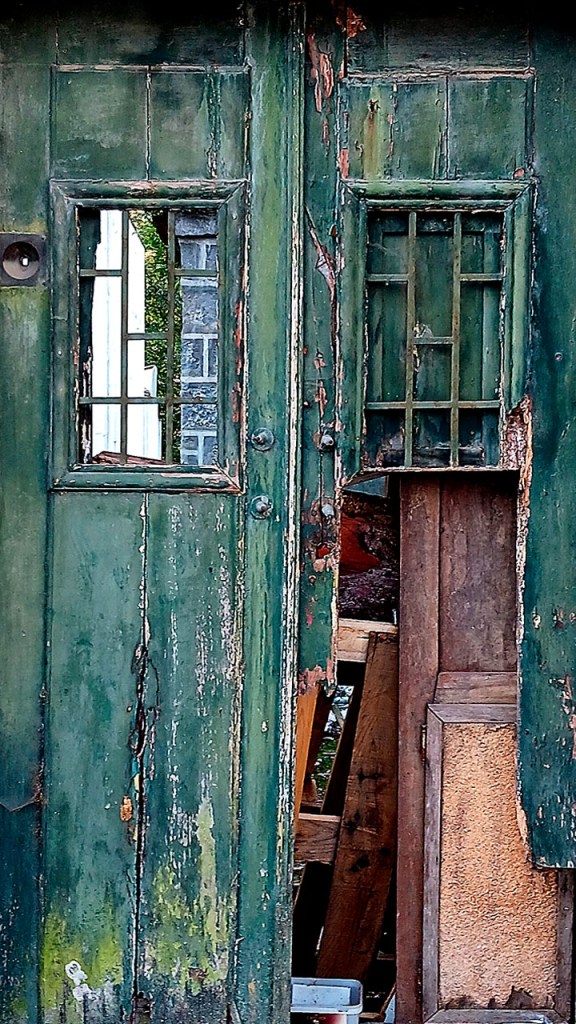
The work “One Place to Live” stems from a process of visual and sonic research, which tells a little of the story of architectural heritage and daily life through photographic, sonic, and video recordings of residential doors. These discoveries are made through extensive drift walks through the cities of Braga, Porto, and Lisbon, between the years 2022 and 2023.
Beyond documenting heritage and architectural history, “One Place to Live” addresses the public issue of housing in Portugal, highlighting the lack of housing options for the population amidst numerous abandoned spaces and companies focused on real estate speculation. Behind every door weathered by time, abandonment, or closed with chains, lies a potential home.
In light of the 50th anniversary of April 25th, the artist also delves into historical pathways, finding in the original recordings of the night from April 24th to 25th, the historical importance of the home in ensuring the safety of the Portuguese people.
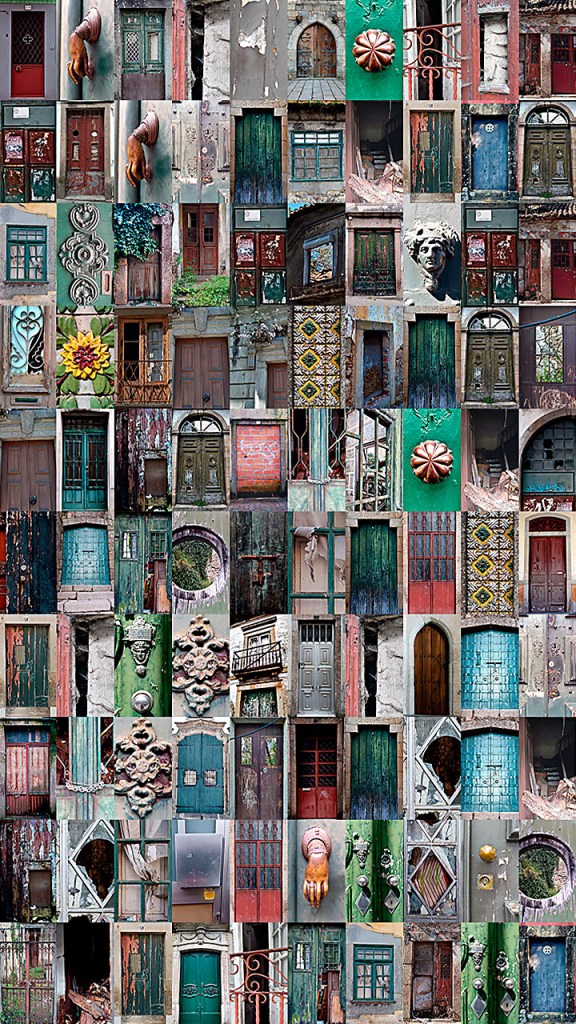
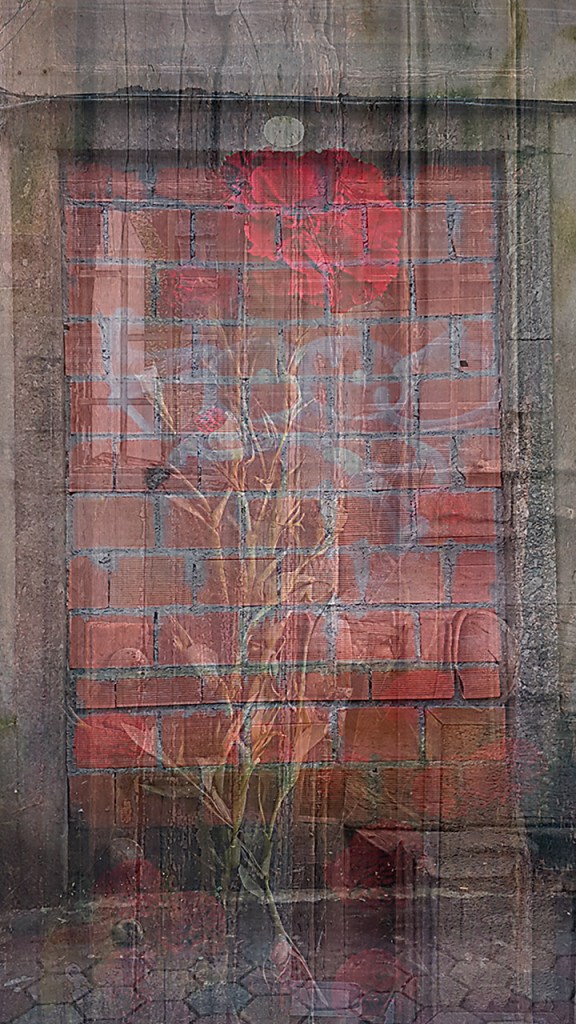
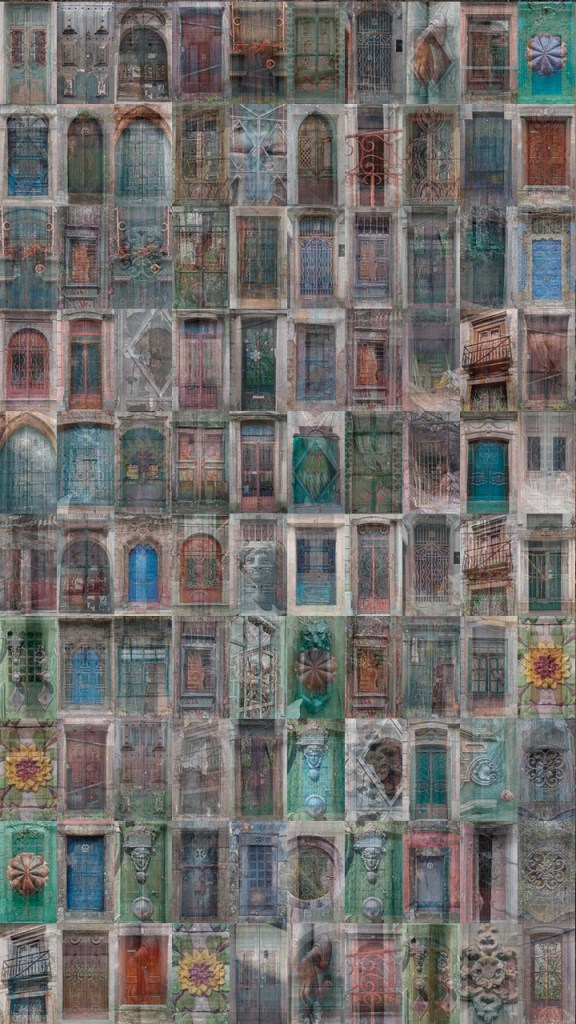
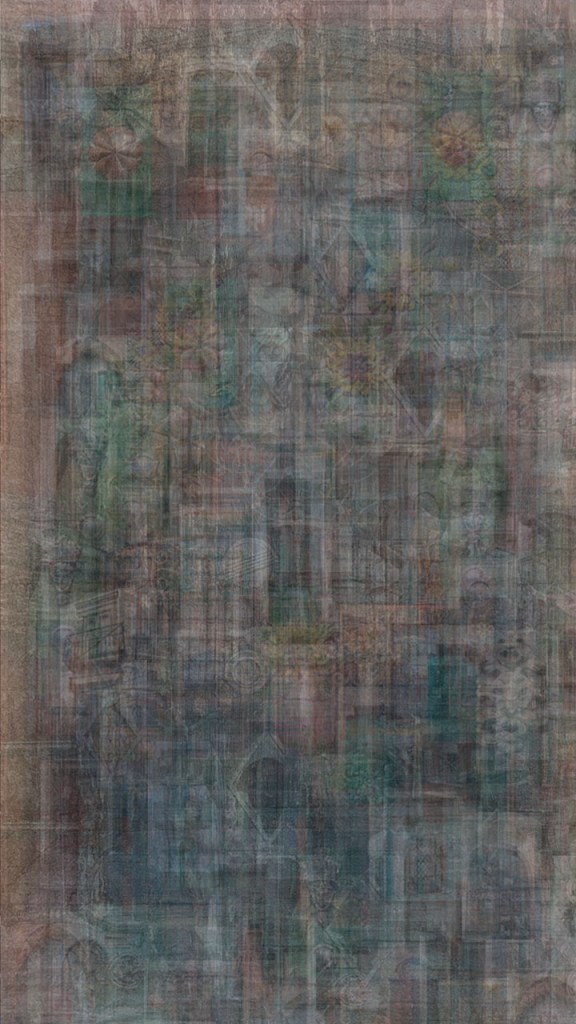
Foto registo + Composição feita pela máquina
A obra “One Place to Live” existe a partir um processo de pesquisa visual e sonora, que conta um pouco da história do património arquitetónico, do quotidiano, em registos fotográficos, de sons e de vídeos de portas de moradia, descobertas através de longos percursos de caminhadas à deriva pelas cidades de Braga, Porto e Lisboa, entre os anos de 2022 e 2023.
Para além de registar o património, a história arquitetónica, a obra “One Place to Live” volta-se para a questão pública da moradia em Portugal, para a ausência de opções de habitação para a população, em meio a tantos espaços abandonados e empresas voltadas à especulação imobiliária. Em cada porta devastada pelo tempo, pelo abandono, fechada por correntes, existe uma possibilidade de moradia.
Face à comemoração dos 50 anos do 25 de abril, a artista percorre também os caminhos da história e encontra, nas gravações originais da noite do 24 para 25 de abril, a importância histórica da casa, na segurança do povo português.
.
“One Place to Live” is an unpublished work, so far exhibited only in an academic setting.
This work was the subject of study for the article titled “Could We Really Be Free Without a Place to Live? Generative Exhibition of Photographic Archive,” approved by double-blind peer review and accepted for publication by Springer as part of the EIMAD 2024 conference.
“One Place to Live” é uma obra inédita, exibida até agora apenas em ambiente acadêmico.
Esta obra foi objeto de estudo para o artigo intitulado “Poderíamos ser realmente livres sem ter onde viver? Exposição generativa de arquivo fotográfico”, aprovado em revisão por pares (duplo-cego) e aceito para publicação pela Springer, como parte da conferência EIMAD 2024.
.
.
[Concept]
The doors are passages from the public to the private, entrances to what is intimate and a right for everyone: the right to housing. Having freedom also means feeling secure, and having a home that shelters you is part of this state of freedom and security.
The right to housing is closely linked to freedom. When a family has to share a house with other families, this relationship becomes very clear. The less perceptible relationship exists in the realm of decision-making and life choices. Housing issues force people to choose paths that aren’t always what they desire, such as selecting a university based on income rather than the profession they want to pursue, staying in a marriage because they can’t afford to live separately, or not getting married due to the fear of not being able to pay rent. These factors touch on what is intimate, affecting no one but ourselves, and gradually transform our lives, preventing us from becoming who we could be.
“One Place to Live”, with 4 minutes of images and sounds, is divided into 14 distinct moments, featuring 277 photos, 10 of which are generated by artificial intelligence, and 15 videos, 6 of which are also generated by AI.
The use of AI tools was chosen to generate images of more doors as an immediate and ideal solution to the problem. These new doors symbolically represent new housing options available to the population. Commands were developed to generate images related to the history of the Carnation Revolution, resulting in doors adorned with red carnations. The original images merge with the virtual ones and are accompanied by audio composed of street sounds, mixed with parts of the original recordings of the broadcasts transmitted by radio to the population on the night of April 24th to 25th.
.

[Conceito]
As portas são passagem do público para o para o privado a entrada para o que é íntimo e um direito de todos: O direito a habitação. E ter liberdade, é também sentir-se seguro, ter uma moradia que lhe abrigue faz parte deste estado de liberdade e segurança.
O direito a moradia está estreitamente ligada à liberdade. Quando uma família tem que dividir uma casa com outras famílias, esta relação fica muito clara. Já a relação menos perceptível, existe no âmbito das tomadas de decisões, das escolhas para viver a vida. A questão da moradia faz as pessoas optarem por caminhos que nem sempre são os que lhes apetecem, como escolher a universidade pensando na renda e não na profissão que irá seguir, quando se escolhe ficar casado porque não tem como viver separado, quando se escolhe não se casar pelo medo de não conseguir pagar uma renda. São tantos fatores que tocam no que é íntimo, que não diz respeito a mais ninguém, somente a nós, e que pouco a pouco acaba por transformar nossas vidas, deixamos de ser o que poderíamos ser.
“One Place to Live” com 4 minutos de imagens e sons, é dividida em 14 momentos distintos, contando com 277 fotos, sendo 10 destas geradas por inteligência artificial e 15 vídeos, sendo 6 gerados também por inteligência artificial.
Optou-se pelo uso da ferramenta com inteligência artificial para gerar imagens de mais portas como uma solução idílica e imediata para o problema. Novas portas que seriam simbolicamente novas moradias disponíveis a população.
Comandos for a desenvolvidos para gerar imagens relacionadas à história da revolução dos cravos, obtendo-se portas adornadas com cravos vermelhos. As imagens originais se fundem com as virtuais e são acompanhadas pelo áudio construído a partir de sons captados nas ruas, mesclados com partes das gravações originais dos comunicados transmitidos pelas rádios a população na noite do dia 24 para 25 de abril.
.
.
At the end of this page, full video about the work.
Freedom is like breathing; we don’t remember to breathe, we simply breathe. We simply exist free…
A small excerpt from the work captured during the → presentation in class at the Minho’s University in a dark room with projection on screen.
Ao fim desta página, vídeo completo sobre a obra.
A liberdade é como respirar; não nos lembramos de respirar, simplesmente respiramos. Simplesmente existimos livres...
← Pequeno trecho da obra capturado durante a apresentação em aula na Universidade do Minho em sala escura com projeção em tela.
.
.

Foto registo + Imagem criada por Inteligência Artificial + Composição feita pela máquina
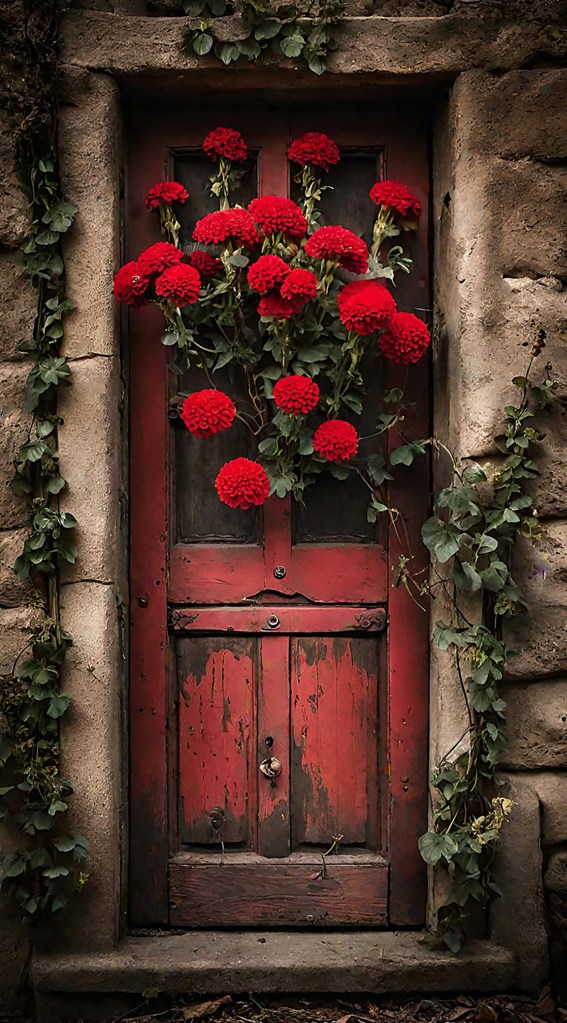
Foto registo + Imagem criada por Inteligência Artificial
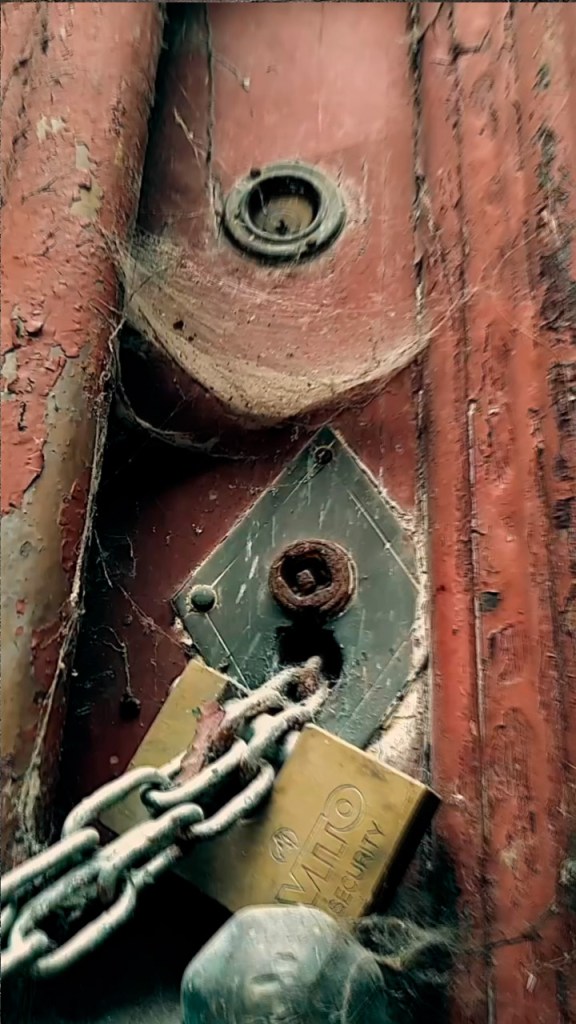
Foto registo imagem capturada durante as caminhadas
,
.
[ ART and TECHNOLOGY ]
When the research process for the work “One Place to Live” began, its final form was not defined. The feeling that the work would never end, that there would always be another door to be recorded, created a sense of continuous movement, leaving the conclusion in suspense, awaiting the best solution. In the meantime, the vision of the work was transforming. What had started as an appreciation of beauty, history, and heritage gradually engaged with social, political, and housing issues in Portugal.
In 2023, the beginning of research in Media Arts at the University of Minho provided the artist with a way to finalize the work. The first contact with the software Processing guided the entire final format of the work, using code to allow the continuous addition of new images when desired. One Place to Live utilizes generative art to define the final visual composition, incorporating a random element of surprise. With each presentation, new images are generated by the machine based on the artist’s code, which manages images, size, transparency, and speed, creating dynamism and beautiful visuals.
[ ARTE e TECNOLOGIA ]
Quando o processo de pesquisa da obra “One Place to Live” começou, não estava definido como seria finalizado. O sentimento de que a obra não teria fim, de que sempre haveria mais uma porta a ser registrada, criava uma sensação de movimento contínuo, deixando a finalização em suspenso, à espera da melhor solução. Nesse meio tempo, a visão sobre a obra se transformava. O que havia começado como uma apreciação do belo, da história e do património, encontrou-se, ao longo do processo, com o social, o político e a questão da moradia em Portugal.
Em 2023, o início da pesquisa em Media Arts na Universidade do Minho trouxe à artista uma forma de finalizar a obra. O primeiro contato com o software Processing direcionou todo o formato final da obra, utilizando código para permitir a adição contínua de novas imagens quando desejado. One Place to Live aproveita a arte generativa para definir a composição visual final da obra, incorporando um componente surpresa o random que permite a cada apresentação, novas imagens são geradas pela máquina, a partir do código elaborado pela artista que administra, imagens, tamanho, transparências e velocidade criando dinamismo e belas imagens.
.
.
[ Installation ]
[ Instalação ]
Upon entering a dark room, we observe images projected onto a surface resembling a large door, positioned centrally at the back of the room. Sound fills the space, but its origin is not visible. It is recommended that the sound source be positioned to match the image model beside it.
Required materials:
- 1 computer with Processing 4 installed.
- 1 projection surface measuring 2.56m x 1.44m (a wooden panel painted with projection paint).
- 2 audio playback devices.
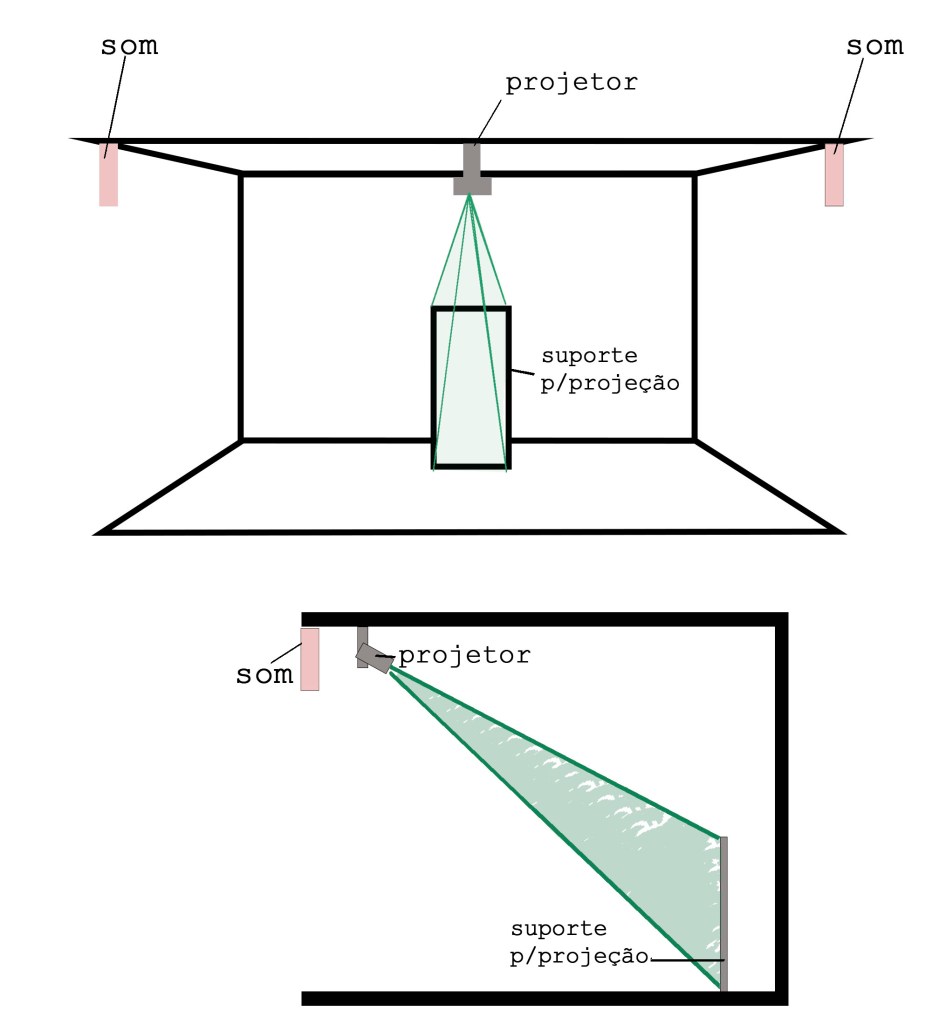
Ao entrarmos em uma sala escura, somos recebidos por uma projeção de imagens sobre uma superfície que se assemelha a uma grande porta, estrategicamente posicionada no centro do espaço, ao fundo. O som permeia o ambiente, ainda que sua fonte permaneça invisível. Recomenda-se que a origem do som seja posicionada de forma a corresponder ao modelo da imagem ao lado.
Material necessário:
- 1 computador com Processing 4 instalado.
- 1 superfície projetável de 2,56m x 1,44m (uma chapa de madeira pintada com tinta para projeção).
- 2 dispositivos de reprodução sonora.

[The 25th of April]
The delicacy of working with a history I was unfamiliar with, in a country where I am a foreigner.
Delving into the research made me realize that the 25th of April was a revolution based on the premise of avoiding bloodshed. I see this as a legacy of great importance, something that needs to be reclaimed today.
The care and concern for the citizen contrasts with the growing dehumanization happening today, where extremist groups and even governments preach the dehumanization of those who think differently, turning them into enemies. This intolerance created on social media puts civility at risk worldwide.
On the occasion of the 50th anniversary of the 25th of April, a moment to celebrate freedom, “One Place to Live” revisits the historical importance of housing in the security of the Portuguese people, inspired by the original recordings from the night of April 24-25, 1974.
[O 25 de abril]
A delicadeza de trabalhar numa história que desconhecia, de um país em que sou estrangeira.
Aprofundar na pesquisa me fez perceber que o 25 de abril foi uma revolução pautada na premissa de evitar que sangue fosse derramado. Vejo isso como um legado de grande importância, algo que precisa ser resgatado nos dias de hoje.
O cuidado e a preocupação com o cidadão contrastam com a crescente desumanização que ocorre atualmente, onde grupos extremistas e até governos pregam a desumanização daqueles que pensam de forma diferente, tornando-os inimigos. Essa intolerância criada nas redes sociais coloca em risco a civilidade em todo o mundo.
À face dos 50 anos do 25 de abril, um momento de celebrar a liberdade, “One Place to Live” revisita a importância histórica da moradia na segurança do povo português, inspirada pelas gravações originais da noite do dia 24 para 25 de abril de 1974.
.
.
“Despite the express concern of not spilling the slightest drop of blood of any Portuguese person…”
(Rádio Clube Português. 1974, April 25).
“Não obstante a expressa preocupação de não fazer correr a mínima gota de sangue de qualquer português…”
(Rádio Clube Português. 1974, April 25).
.


Watch the video
Enable English subtitles in the YouTube settings.
Assista o vídeo
Ative as legendas em português nas configurações do You Tube
One place to live fotos #liriavarne
#mediaArts #processing #fotoregistro #historia #arte #patrimonio #legado #artedearquivo #liria Varne @liriavarne Universidade do minho, media arts
 líria varne // Visual Artist + Performer + Media Artist